
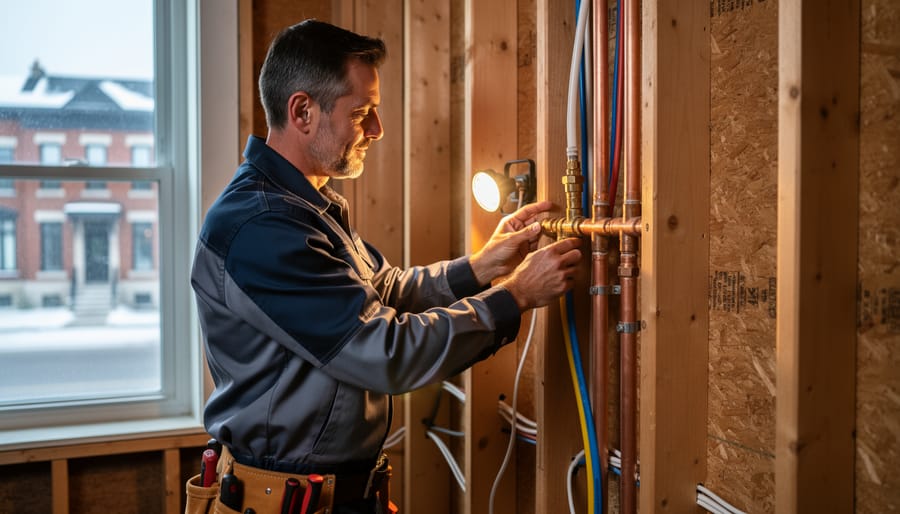
Plan your renovation timeline around plumbing rough-ins, which must happen before drywall installation and typically require 2-3 weeks of lead time in Ottawa’s competitive contractor market. Schedule your consultation during the design phase, not after you’ve committed to cabinet layouts or fixture locations, since drain lines and water supply connections determine what’s actually possible in your space.
Verify your plumber holds valid Ontario College of Trades certification and carries minimum $2 million liability insurance before signing contracts. Ottawa’s aging housing stock, particularly in neighbourhoods like the Glebe and Centretown, often conceals galvanized pipes, knob-and-tube wiring near plumbing runs, and outdated venting systems that code requires upgrading once you open walls.
Budget an additional 15-20% beyond quoted prices for discovery work. That beautiful kitchen renovation frequently uncovers corroded shut-off valves, insufficient water pressure requiring main line upgrades, or floor joists compromised by previous DIY plumbing attempts. Professional plumbers assess your home’s entire system, not just the visible components, preventing the costly mid-renovation surprises that derail timelines and budgets.
Coordinate mechanical, electrical, and plumbing trades through a single point of contact. Ottawa’s seasonal construction rushes, particularly spring and early fall, mean scheduling conflicts between trades can add weeks to your project when contractors can’t access the same workspace simultaneously.
The Hidden Plumbing Challenges in Ottawa Homes

What Makes Ottawa Plumbing Different
Ottawa’s plumbing landscape presents unique challenges that homeowners simply won’t encounter in milder climates. Our capital city experiences some of Canada’s harshest winters, with temperatures regularly plunging below -20°C, putting tremendous stress on pipes and fixtures. Frozen pipes aren’t just an inconvenience here—they’re a genuine seasonal threat that can cause catastrophic damage if not properly addressed during renovations.
The city’s aging infrastructure adds another layer of complexity. Many Ottawa neighbourhoods feature homes built between the 1950s and 1970s with original plumbing that’s reaching the end of its lifespan. Galvanized steel pipes, once standard, corrode over time and can harbour lead—a serious concern for families with young children.
Heritage home enthusiasts face particularly intricate plumbing decisions. The Glebe, Sandy Hill, and New Edinburgh boast stunning century homes with plumbing systems that require specialized knowledge to modernize while preserving historical integrity. Working within existing structures often means creative problem-solving around thick stone foundations and limited access points.
Local plumbers familiar with Ottawa’s building codes, soil conditions, and seasonal demands bring invaluable expertise to home improvement projects, ensuring your renovations withstand our demanding climate while meeting current safety standards.
Building Codes You Can’t Ignore
Before you demolish that bathroom wall or relocate your kitchen sink, understanding Ottawa’s plumbing regulations could save you significant headaches and costly fines. The City of Ottawa requires building permits for most plumbing work beyond simple repairs, including installing new fixtures, rerouting pipes, or adding bathrooms. These permits ensure your renovations meet the Ontario Building Code and local standards for safety and water conservation.
Here’s what many homeowners don’t realize: only licensed plumbers can pull plumbing permits in Ottawa, which means DIY enthusiasts must work with certified professionals for major projects. The permit process typically takes two to three weeks, so factor this timeline into your renovation schedule. Inspections are mandatory at specific stages, particularly for underground work or installations behind walls.
Working without proper permits can come back to haunt you during home sales, as savvy buyers often request proof of permitted work. Insurance claims for water damage may also be denied if unpermitted plumbing contributed to the problem. While it might seem like bureaucratic red tape, these regulations protect your home’s value and your family’s safety. When interviewing plumbers, always confirm they’re licensed and ask about their experience navigating Ottawa’s permit system.
Essential Plumbing Services for Common Home Improvement Projects
Kitchen Renovations: More Than Just New Cabinets
That dream kitchen you’ve been pinning on Pinterest involves more plumbing work than you might expect. Beyond selecting gorgeous countertops and cabinet finishes, your renovation likely requires significant behind-the-walls changes that only licensed plumbers should handle.
Moving your sink even a few feet means rerouting drain lines and water supply pipes—a task that demands precision to prevent leaks and ensure proper drainage. Many Ottawa homeowners discover their older homes have outdated galvanized pipes that should be replaced during renovations, turning a simple update into a necessary infrastructure upgrade.
Installing a new dishwasher requires dedicated hot water lines and proper drainage connections. Similarly, adding a pot filler above your stove, an under-sink water filtration system, or upgrading to a commercial-style faucet all involve plumbing modifications that must meet Ontario Building Code requirements.
Local plumber Sarah Chen, who’s completed dozens of Glebe and Westboro kitchen renovations, notes that coordinating plumbing work with your general contractor prevents costly delays. “We need access at specific stages—rough-in before drywall, final connections after cabinets,” she explains. Planning these touchpoints early keeps your project on schedule and within budget, ensuring your beautiful new kitchen functions flawlessly for years to come.

Bathroom Updates and Basement Conversions
Bathroom renovations and basement conversions represent two of the most ambitious home improvement projects Ottawa homeowners tackle, and both require careful plumbing expertise to pull off successfully. Whether you’re dreaming of a spa-like ensuite in your Westboro bungalow or adding a rental suite in your Barrhaven basement, understanding the plumbing implications early will save you headaches down the road.
For bathroom updates, professional plumbers assess your existing water supply lines and drainage capacity before any demolition begins. Moving fixtures like toilets, sinks, or showers often means rerouting pipes through walls and floors, which requires permits and inspections under Ottawa’s building codes. Many older Ottawa homes built before 1970 have galvanized pipes that should be replaced during renovations to prevent future corrosion issues.
Basement conversions present unique challenges, particularly when adding new bathrooms below the main sewer line. Since gravity won’t help waste flow upward, many homeowners need sewage ejector pumps installed—a specialized system that grinds waste and pumps it to your main drainage line. This is especially common in areas like Riverside and Old Ottawa South where homes sit on higher water tables.
Proper drainage planning is essential to prevent basement water leaks and moisture problems. Licensed plumbers coordinate with basement waterproofing specialists to ensure floor drains, sump pumps, and backwater valves work together seamlessly. These systems protect your investment during Ottawa’s spring thaws and summer storms, when basement flooding risks peak across the city.
Outdoor Living Spaces and Seasonal Considerations
Ottawa’s extreme seasonal swings demand specialized plumbing solutions for outdoor living spaces that many homeowners overlook during renovation planning. If you’re installing an outdoor kitchen or bar area, consider frost-proof fixtures and proper drainage systems that can withstand our punishing winters. Local plumbers familiar with Ottawa’s climate know to install water lines below the frost line (typically 1.8 metres deep in our region) and recommend shut-off valves inside your home for easy winterization.
Irrigation systems present another seasonal challenge. Professional installation ensures your sprinkler system includes proper drainage capabilities and blow-out ports for autumn winterization. Most Ottawa plumbers offer specialized winterization services each fall, using compressed air to clear water lines and prevent costly freeze damage that commonly occurs when temperatures plummet in late October.
Spring brings its own considerations as melting snow and ice can stress outdoor plumbing connections. Savvy homeowners schedule early-season inspections to catch winter damage before firing up their outdoor spaces for summer entertaining. Whether you’re planning an elaborate outdoor kitchen or simply adding a garden hose connection, consulting with experienced Ottawa plumbers during the design phase saves headaches and expensive repairs down the road.
Energy Efficiency Upgrades
Ottawa’s climate extremes make energy-efficient plumbing upgrades particularly valuable for homeowners looking to reduce utility costs. Professional plumbers can install tankless water heaters that heat water on demand rather than maintaining a reservoir, cutting energy consumption by up to 30 percent compared to traditional models. Low-flow fixtures like showerheads and faucet aerators maintain water pressure while using significantly less water—a simple upgrade that typically pays for itself within two years through reduced water and heating bills. Pipe insulation is another often-overlooked service that prevents heat loss as hot water travels through your home, especially important in older Ottawa properties where pipes run through unheated spaces. Local plumbing professionals understand which upgrades deliver the best return on investment for our region’s unique conditions, helping you prioritize improvements that align with your budget and household needs.
How to Choose the Right Ottawa Plumbing Service

Credentials That Matter in Ontario
When working with professional contractors on your home improvement project, it’s essential to verify proper credentials. In Ontario, licensed plumbers must hold a Certificate of Qualification from the Ontario College of Trades, which ensures they’ve completed the required apprenticeship and passed provincial exams. Always ask to see this certification before hiring.
WSIB coverage is equally critical. This workplace insurance protects you from liability if a worker gets injured on your property. Reputable Ottawa plumbing companies carry WSIB clearance certificates, which they should provide upon request. Without it, you could be held financially responsible for workplace accidents.
Comprehensive liability insurance is another must-have. Your plumber should carry both general liability and professional liability coverage, protecting you against property damage or errors in workmanship. Request proof of insurance with coverage amounts of at least two million dollars.
Many established Ottawa plumbers also belong to professional associations like the Canadian Institute of Plumbing and Heating, demonstrating their commitment to industry standards and ongoing education.
Getting Accurate Quotes and Timelines
Before committing to any plumbing work, arm yourself with the right questions. Ask potential contractors if they’ll provide a detailed written estimate that breaks down labour, materials, permits, and potential additional costs. You’ll want to know whether they guarantee their work and for how long—reputable Ottawa plumbers typically offer warranties ranging from one to five years.
Inquire about their licensing and insurance coverage, and don’t hesitate to request references from recent jobs similar to yours. It’s also wise to ask about their familiarity with Ottawa’s building codes and whether they handle permit applications themselves or if that falls on you.
A comprehensive estimate should itemize everything: specific fixtures and materials with model numbers, labour hours, disposal fees, and any necessary inspections. Watch for vague line items like “miscellaneous costs”—these can balloon unexpectedly. The best estimates also outline payment schedules and project milestones.
As for timelines, Ottawa homeowners should expect realistic windows. A standard bathroom renovation involving plumbing typically takes two to three weeks, while a simple fixture replacement might be completed in a day. Kitchen remodels with extensive plumbing modifications often require four to six weeks. Remember that Ottawa winters can extend timelines if work involves exterior connections—frozen ground complicates excavation.
One Sandy Hill homeowner learned this lesson when her basement bathroom project, quoted for two weeks in January, stretched to four due to frozen soil conditions. Season matters here, so factor in Ottawa’s climate when planning your renovation schedule.
Real Ottawa Stories: When Professional Plumbing Made the Difference
Last winter, the Hendersons in Westboro learned an expensive lesson about cutting corners. During their kitchen renovation, they hired an unlicensed handyman to relocate their plumbing—saving about $800 upfront. Three months later, a burst pipe flooded their newly renovated space, causing over $15,000 in water damage. “We thought we were being smart with our budget,” Sarah Henderson admits. “Turns out, proper permits and licensed plumbers exist for a reason.”
Contrast that with the Chens’ experience in Barrhaven. When planning their basement renovation, they consulted a licensed plumber before demolition began. The professional identified outdated galvanized pipes that wouldn’t have supported their planned bathroom addition. “Our plumber mapped out a whole-house repiping strategy,” Michael Chen explains. “We phased it over two years, and now we have confidence in our plumbing for decades to come.”
In Glebe, the Martineau family’s story offers a middle ground. During their bathroom upgrade, they attempted DIY fixture installation to save money but hired professionals for the roughing-in work. “We knew our limits,” Jacques Martineau says. “The plumber did the technical work behind the walls, ensuring everything met code. We handled the cosmetic stuff ourselves and learned a lot in the process.”
These stories reflect a common theme across Ottawa neighbourhoods: professional plumbing services aren’t just about fixing problems—they’re investments in your home’s long-term value and your family’s safety. Whether you’re in Kanata, Orleans, or anywhere in between, the upfront cost of licensed, insured professionals consistently proves cheaper than correcting amateur mistakes. The Hendersons now tell everyone: professional plumbing isn’t an expense, it’s insurance.
Planning Your Home Improvement Timeline Around Plumbing Work
Timing is everything when it comes to plumbing work in your renovation. Unlike cosmetic updates that can happen in isolation, plumbing modifications typically need to occur early in your project timeline, often before flooring, cabinetry, or finishing work begins. This sequencing ensures pipes and drains are properly installed behind walls and under floors before these areas are sealed up.
In Ottawa, seasonal considerations play a significant role in scheduling. Spring and fall offer ideal conditions for exterior plumbing work, while winter projects—though manageable—may face complications if they involve outdoor connections or septic systems. Many local plumbers experience peak demand from April through October, so booking your plumber several weeks in advance during these months prevents frustrating delays.
Coordination with other trades requires clear communication. Your plumber should ideally consult with electricians to avoid conflicts with wiring, and with framers before walls are closed. For home improvement projects involving multiple contractors, designate one person—whether yourself, a general contractor, or project manager—as the central coordinator to prevent scheduling conflicts.
Obtain necessary permits before starting work. Ottawa’s building department typically requires permits for significant plumbing changes, and inspections must occur at specific stages. Failing to account for inspection scheduling can halt your entire renovation. A reputable local plumber will guide you through this process and ensure compliance with municipal codes, saving you costly corrections down the road.
When it comes to home improvement projects, bringing qualified plumbing professionals into the conversation early can save you thousands of dollars and countless headaches down the road. Whether you’re planning a kitchen refresh, bathroom renovation, or basement conversion, the peace of mind that comes with expert guidance is invaluable.
The smartest move Ottawa homeowners can make is reaching out to trusted local experts like John The Plumber Ottawa during the planning phase, not after problems arise. Professional plumbers can assess your existing infrastructure, identify potential code compliance issues, and provide realistic timelines and budgets that keep your project on track.
Your next steps are straightforward: schedule consultations with licensed plumbers who understand Ottawa’s unique building requirements, gather multiple quotes for comparison, and verify credentials before committing. Remember, quality plumbing work is an investment in your home’s long-term value and your family’s comfort. By partnering with experienced professionals from the start, you’re not just renovating—you’re building confidence that your home improvement project will deliver lasting results without the stress of unexpected plumbing disasters.
You may also like
-
Pro-Grade Cleaning Supplies That Transform Ottawa Homes
-
5 Benefits of Working With a Roofing Company in Ottawa
-
How to Fix Water Leaks in Your Basement Walls? 4 Ways to Repair the Roofs in Your Home
-
10 Simple Tips to Choose the Best Roofing Systems for Your House
-
Understanding the Top 3 Basement Waterproofing Methods